Funded under the Interreg North-West Europe Programme with €3.1 million in EU funding, out of a total budget of €5.1 million, SLOWTOUR will run for 3.5 years. The project supports industrial heritage cities in reimagining tourism through slow, inclusive, and place-based approaches that stimulate local economic development, strengthen citizen engagement, and enhance the overall attractiveness of cities.
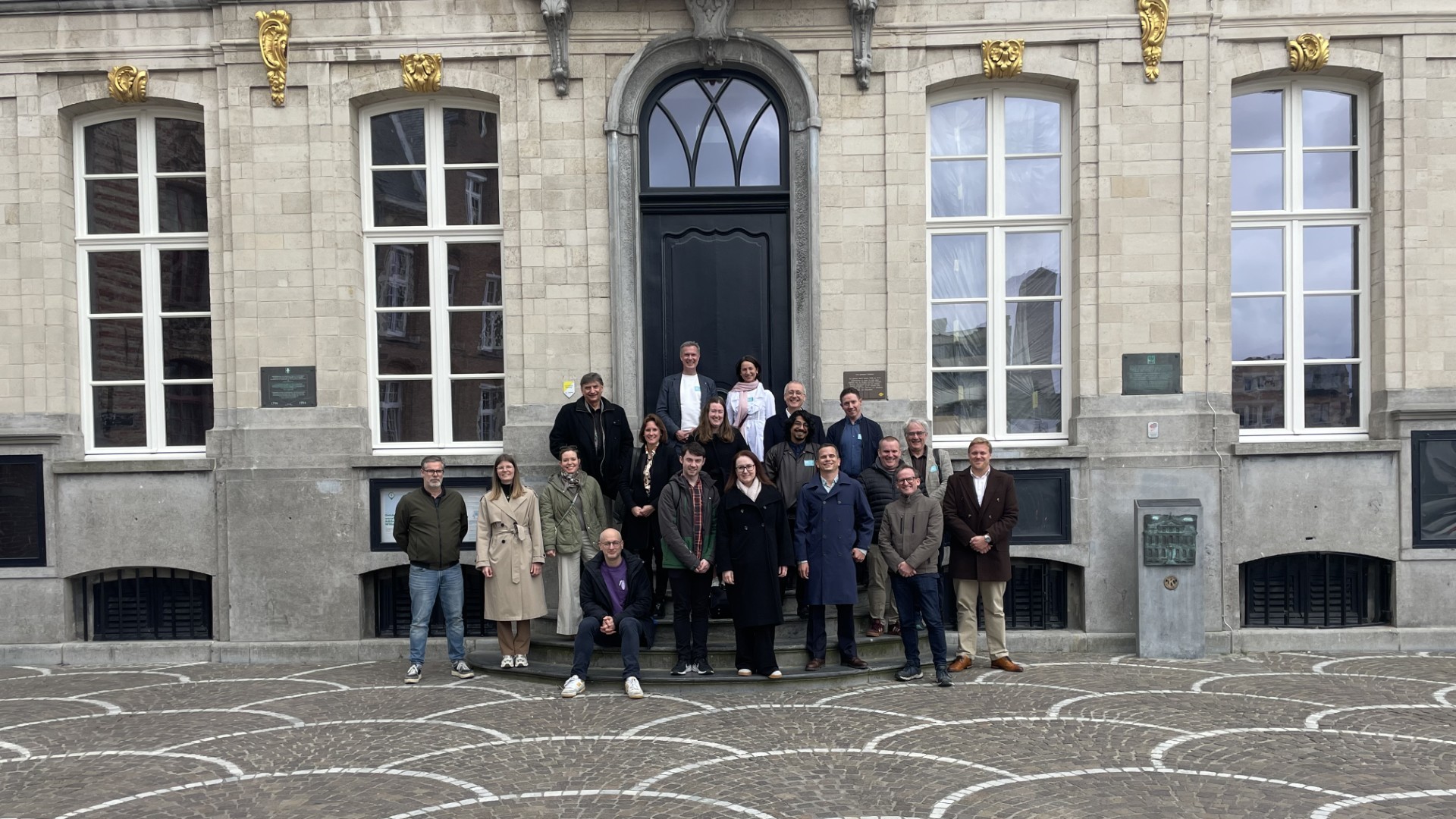
SLOWTOUR’s kick-off meeting, held on 13–14 April in Roeselare, brought the partnership together to begin its shared journey of using slow tourism to revitalise industrial heritage across North-West Europe. During the meeting, partners presented pilot projects focused on involving local communities in the creation of tourism solutions that give new life to former industrial areas.
The meeting included a site visit to the Krottegem district in Roeselare, where participants learned about efforts to rejuvenate the area by developing a slow tourism route that integrates local stories and knowledge into its design. Over the two days, participants built synergies and shared experiences, united by the common goal of supporting the pilot projects under the SLOWTOUR initiative.
In addition, the partnership explored synergies with the fellow Interreg North-West Europe project ReStart, which aims to guide, monitor, and scale up regenerative tourism practices. This exchange provided further opportunities to reflect on citizen engagement approaches and to inspire action for industrial heritage revitalisation rooted in residents’ perspectives.
The local project team of Roeselare highlighted the significance of the project and the kick-off meeting, stating:
“SLOWTOUR empowers citizens to tell their own story to visitors while using tourism as a force for better living. The city was pleased to host participants from across North-West Europe in Roeselare and they are warmly encouraged to return to discover more of the city and the wider region. We are looking forward to the collaboration ahead and the upcoming positive impact on industrial heritage in several medium sized cities across North-West Europe.”
The discussions over the two days were aptly rounded off by the Lead Partner, the City of Roubaix, which underlined how:
“It is Inspiring to see communities across North-West Europe collaborate, share experiences, and develop joint strategies to enhance the quality of life for our residents and our visitors. The city of Roubaix is proud to be the lead partner of this project. This was a successful kick-off meeting, with partners engaging in productive discussions on slow tourism in an environment of collaboration and exchange on the joint goal of using tourism as a driver of revitalisation of industrial heritage.
What is the SLOWTOUR Project?
SLOWTOUR aims to address common challenges faced by small and medium-sized cities in North-West Europe, including socio-economic decline, underused industrial heritage sites, and limited integration into tourism flows.
Despite efforts to repurpose heritage sites, many towns still struggle with revitalisation, particularly in disadvantaged or emerging neighbourhoods. Industrial heritage assets like old factory buildings, canals and sites, often remain underused as “hidden gems,” with untapped potential to support sustainable urban tourism.
SLOWTOUR proposes slow tourism as a catalyst for regeneration, community inclusion, and economic development. The project will reimagine neglected industrial heritage areas as vibrant, inclusive destinations, strengthening local pride, boosting visitor engagement and economic activity in emerging neighbourhoods.
How will SLOWTOUR deliver impact?
The territorial diversity of the partners involved allows to test slow tourism models in varied socioeconomic and cultural settings, enabling partners to co-develop transferable solutions and build a resilient community of practice across North-West Europe.
The partners will enhance institutional capacity and develop a joint Slow Tourism Blueprint, a strategic framework for citizen engagement, best practices, and recommendations for uptake.
Six pilot actions in four countries will test the blueprint through activities such as heritage-based experiences, walking and cycling routes, food-related events, and the temporary or permanent reuse of public spaces.
These community-led pilots will feed into the final output: a Slow Tourism Playbook, a transferable toolkit designed to inspire cities and regions. The lessons learned will help at least 20 additional cities replicate inclusive slow tourism offers effectively and sustainably.
Who is behind SLOWTOUR?
- City of Roubaix (France)
- IDETA (Belgium)
- City of Roeselare (Belgium)
- Galway City Council (Ireland)
- Atlantic Technological University (Ireland)
- Limerick City and County Council (Ireland)
- NECSTouR (Belgium)
- City of Pirmasens (Deutschland)