Governance criteria for regional climate action in the European tourism sector
Download

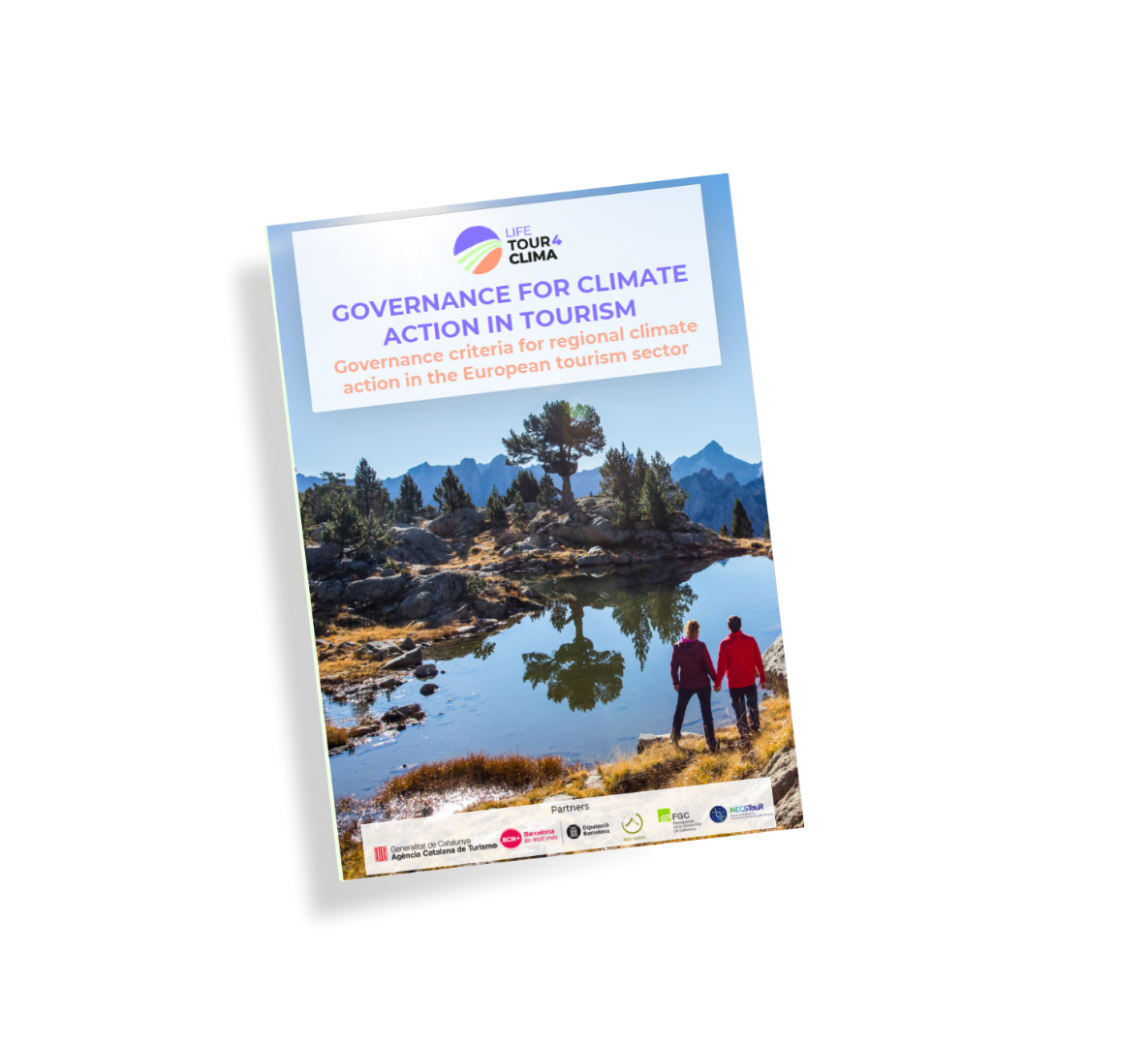
New publication from the LIFE TOUR4CLIMA project, featuring case studies from NECSTouR members, provides lessons learned and a set of criteria to strengthen climate action governance in tourism.
The global tourism sector faces a complex reality: while it is a primary driver of economic wealth, it also significantly contributes to greenhouse gas emissions; in turn, these emissions drive climate change, causing severe environmental degradation and adaptation challenges that threaten the sector’s own future. Despite international frameworks and climate plans, destinations repeatedly struggle to translate these strategies into operational reality.
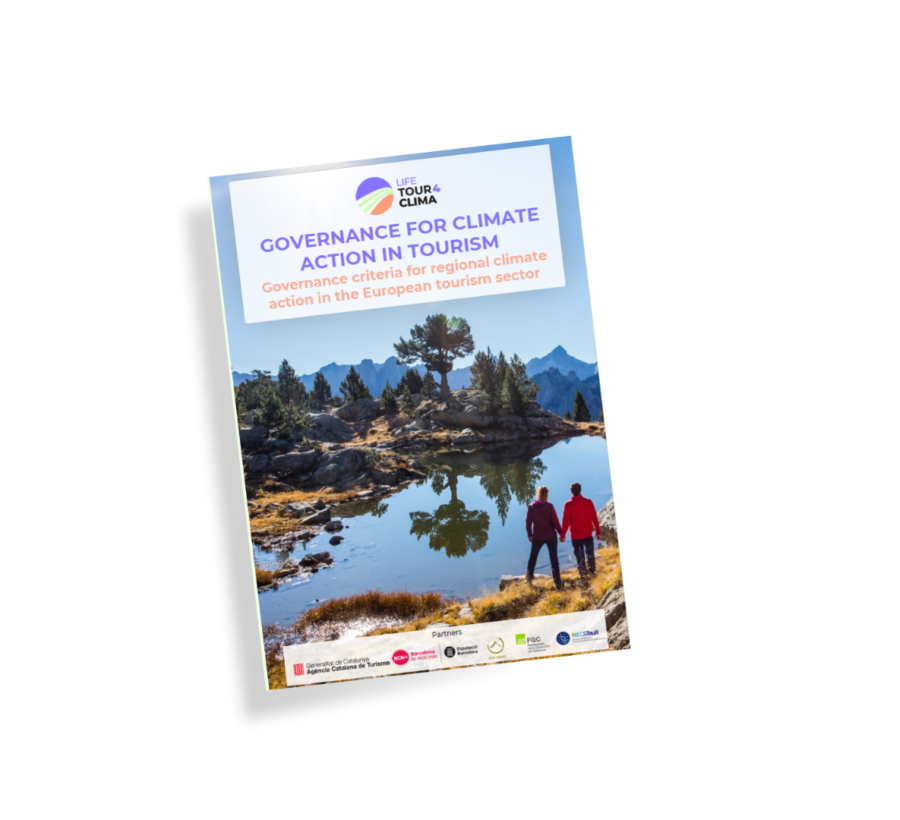
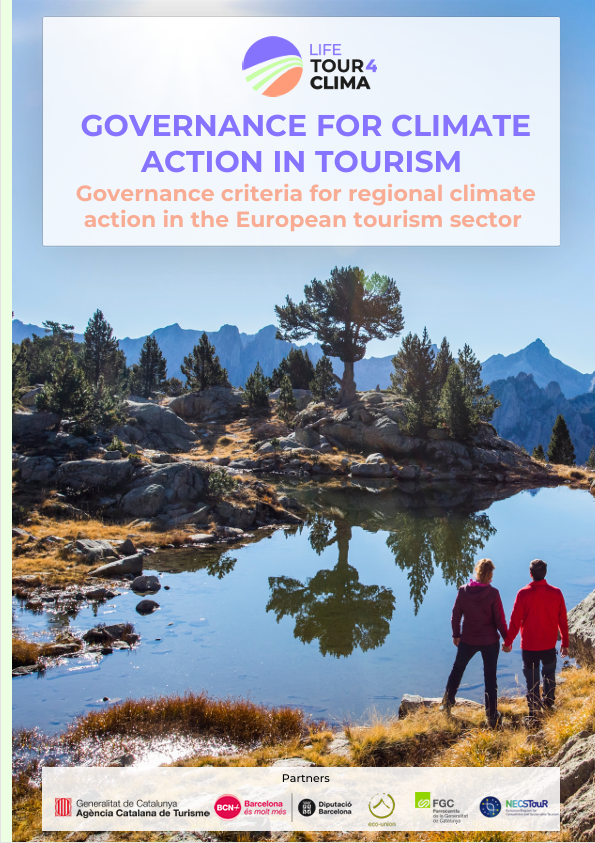
To close this gap between plans and practice, the new report Governance criteria for regional climate action in the European tourism sector —developed under the LIFE TOUR4CLIMA project with the collaborative efforts of key partners including the Catalan Tourist Board, NECSTouR, eco-union, the Provincial Council of Barcelona, and Ferrocarrils de la Generalitat de Catalunya— analyses how to improve regional governance frameworks. The document provides an actionable roadmap based on lessons from frontrunner European territories.
This guide is primarily aimed at regional and local public administrations, destination management organizations, tourism stakeholders, and policymakers committed to driving an effective ecological transition.
The report draws on research conducted across leading European tourism destinations and incorporates insights from 18 interviews with destination practitioners, policymakers, climate experts, civil society representatives, and academics.
This resource is extremely useful because it provides a practical route to help tourism authorities overcome governance and implementation challenges and transform ambitious climate goals into concrete action. The report identifies three governance pillars that enable effective climate action in tourism:
Additionally, the report incorporates examples of governance approaches implemented in NECSTouR regions including Catalonia, Andalusia, the Canary Islands, Flanders, Normandy, Scotland, Skåne, Valencia, Centre-Val de Loire; as well as Finland and Ireland.
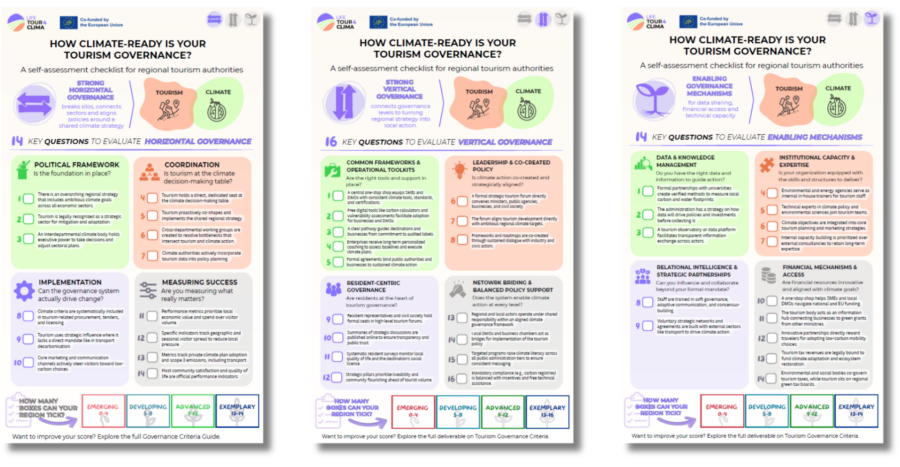
To facilitate navigation, the report also includes practical infographics that visually synthesize the governance criteria.
How climate-ready is your tourism governance? Use the report’s self-assessment checklists to identify strengths, gaps and opportunities to strengthen climate action governance in your destination.