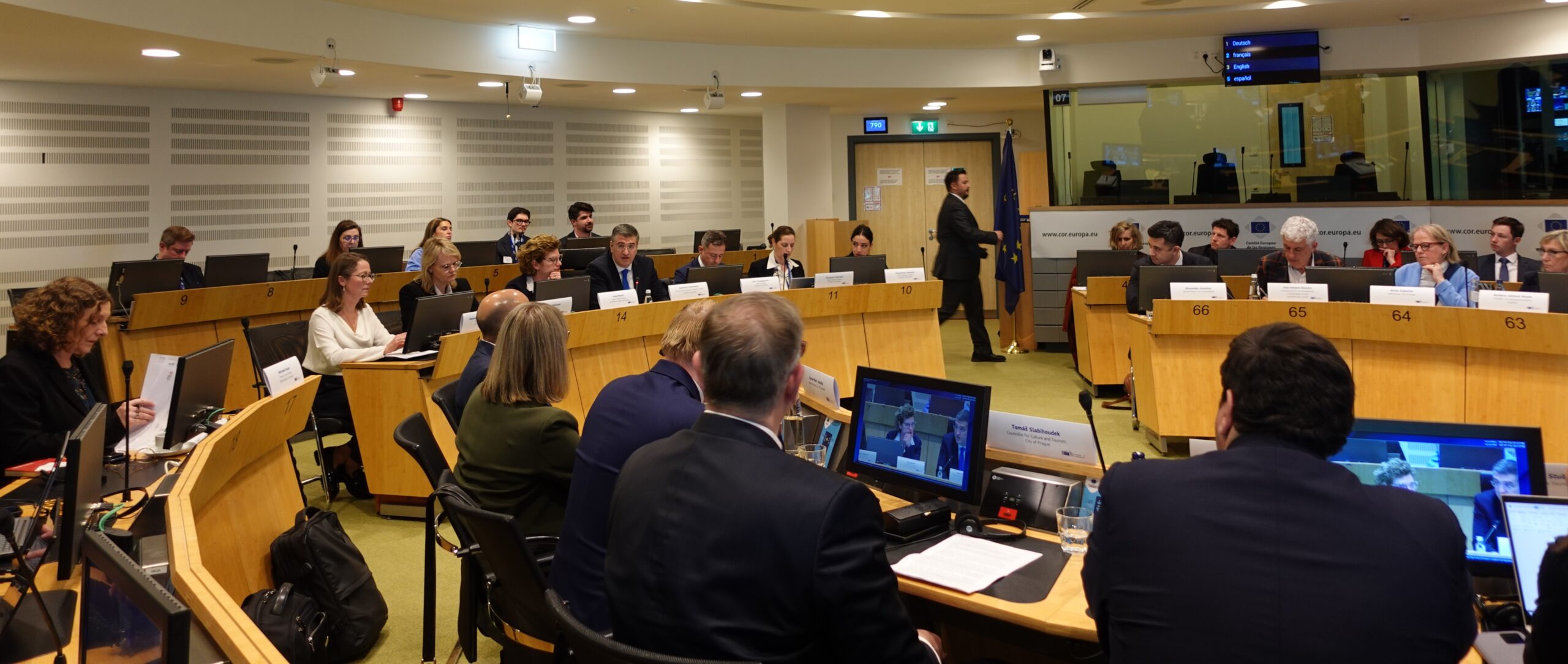
Across Europe, destination management and marketing organisations are navigating profound structural change. Tourism remains a cornerstone of economic activity, job creation, and regional identity, yet the conditions under which destinations operate are increasingly complex. Local and regional authorities must reconcile resident and visitor expectations, respond to environmental and climate pressures, and embrace new digital technologies that are reshaping how tourism is planned, monitored, and managed.
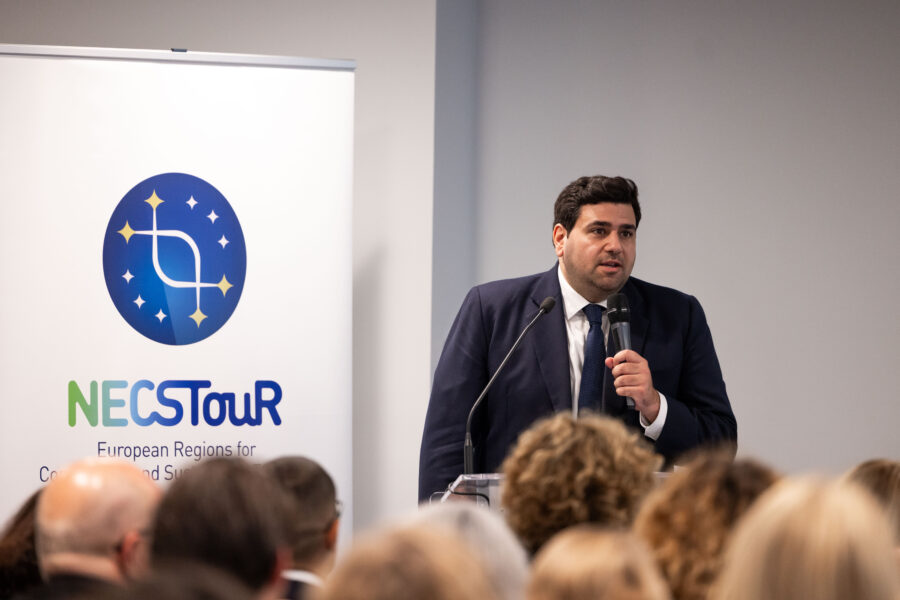
Speaking ahead of the meeting, President Cuip stated:
“Europe does not need more tourism; Europe needs better tourism. The real challenge is to organise flows in time and space, empower regions, and connect territories so that tourism strengthens communities rather than overwhelms them.”
Key Messages Delivered by the President
During the dialogue, President Cuip emphasised three core challenges the upcoming EU Strategy should address to help cities and regions develop tourism that is better balanced with the needs of local communities:
- Moving from Promotion to Management
Destinations must shift from volume‑driven promotion to proactive management of tourism flows. Better organisation of mobility and visitor distribution across seasons, locations, and transport modes is essential to maintaining liveability and preserving local character.
- Breaking Policy Silos
Tourism cannot be addressed in isolation. Effective governance must connect tourism with mobility planning, housing policy, environmental management, and spatial development.
- Investing Where It Matters
Infrastructure, skills development, and digital tools are indispensable to steering the transition. Without investment, there is no transformation. Regions need targeted support to modernise mobility systems, develop climate‑adaptation measures, and deploy advanced data tools.
The Case for Stronger Regional and Cross‑Municipal Cooperation
President Cuip underlined that tourism flows transcend administrative borders, while governance often does not. Stronger cooperation between municipalities, regions, and cross‑border areas is therefore crucial.
Key priorities include:
- strengthening sustainable mobility options that connect destinations seamlessly;
- ensuring multimodal transport from the first to the last mile;
- redistributing tourism flows by improving access to lesser‑known areas.
- with integrated information, ticketing and governance.
“If we want to spread tourists, we must first spread access,” President Cuip noted.
He welcomed a stronger EU role in supporting regional mobility‑tourism strategies, ensuring interoperability across regions, and providing funding for sustainable transport solutions.
What Works: Data, Mobility, and Governance
The President also shared proven practices from leading European destinations:
- Data‑driven management to anticipate and steer flows through real‑time insights.
- Sustainable mobility solutions to make low‑carbon travel the easiest option.
- Integrated governance aligning tourism, transport, and environmental planning.
He highlighted that there is no smart tourism without smart data. Digital tools and AI, supported by initiatives such as the European Data Competence Centre, are essential to shifting from reactive to proactive destination management.
A European Strategy Anchored in Local Realities
In conclusion, President Cuip stressed that this is an area where Europe can genuinely make a difference. While tourism remains primarily a national and regional competence, the EU Strategy should:
- build on the actions and expertise of regions and cities;
- respect the principle of subsidiarity;
- provide strategic guidance and coherence across policies;
- equip regional and local authorities with the tools and funding needed to deliver sustainable, community‑centred tourism.
“Europe must act as an enabler by setting a common direction while ensuring implementation remains rooted in territorial realities and adapted to local needs.”