October 10, 2026
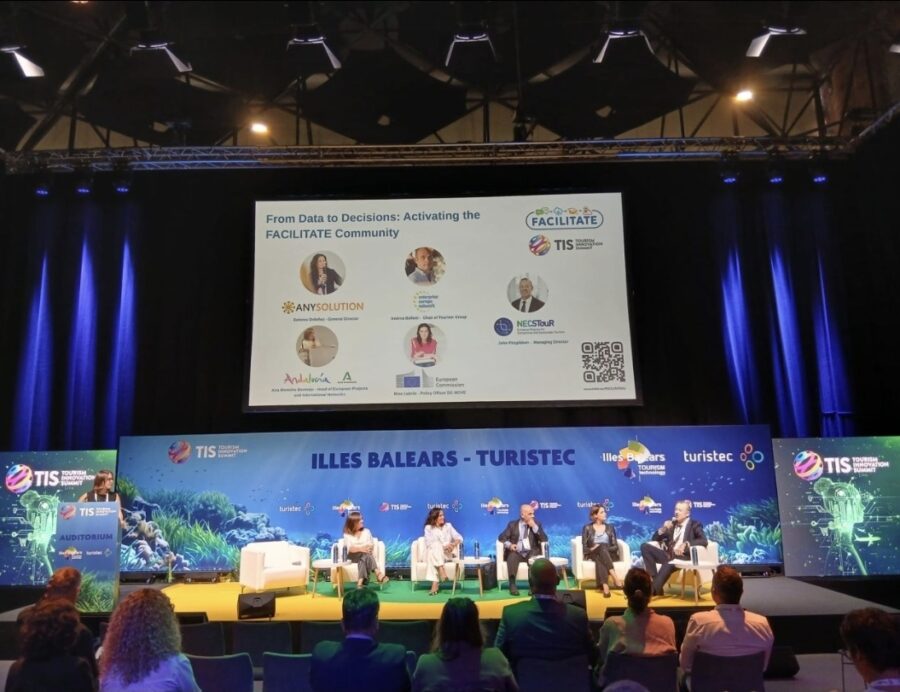
NECSTouR launches FACILITATE Community at TIS 2026 to Support Destinations & SMEs
[...]
See more

In the consultation response, NECSTouR emphasises that air connectivity should not be viewed purely through the lens of competition and profitability, but as a critical enabler of territorial cohesion, regional resilience and balanced tourism development across Europe.
Reframing Air Connectivity Beyond Transport
At the heart of NECSTouR’s position is a call to recognise that air transport plays a fundamental socio-economic role in many parts of Europe particularly islands, outermost regions, mountainous areas and sparsely populated territories. For these regions, connectivity is not optional: it supports access to employment, services, tourism markets and economic diversification. NECSTouR stresses that removing or weakening such connections could undermine local economies and widen regional disparities.
NECSTouR clarifies that it does not advocate for unchecked air traffic growth, but instead supports a model of “proportionate, sustainable and resilient connectivity” aligned with EU climate and tourism objectives.
Key Recommendations to the European Commission
We argue that State aid rules should explicitly acknowledge that support to airports and air services can serve broader public-interest goals, including sustainable tourism, balanced visitor flows and regional accessibility. Well-managed connectivity can help:
The draft Guidelines’ approach to defining airport catchment areas risks oversimplifying real-world conditions. Factors such as geography, seasonality, ferry access, border effects and first- and last-mile transport can significantly affect how airports serve populations and visitors.
NECSTouR therefore calls for a flexible, evidence-based methodology that reflects actual travel behaviour rather than theoretical distance calculations.
While acknowledging the importance of avoiding long-term dependency on subsidies, NECSTouR warns against rigid cut-off dates or thresholds that could harm regional connectivity. We recommend that operating aid remain available beyond 2032 where structural market failures exist and where connectivity is essential for regional resilience.
Assessment criteria should include:
NECSTouR highlights that regional airports must invest in decarbonisation, digitalisation, climate adaptation and multimodal access to meet EU policy goals. We caution that overly restrictive rules could limit the ability of airports to modernise and transition to greener operations and we call for investment aid to support:
NECSTouR argues that the limited uptake of start-up aid in the past reflects design shortcomings rather than lack of relevance.
A revised system should target routes that:
Such aid should remain temporary, proportionate and aligned with regional strategies.
There is a strong need to connect State aid decisions with measurable sustainability and governance outcomes. We propose integrating criteria such as:
This would ensure public funding contributes not just to connectivity, but to “better connectivity” aligned with EU strategies.
Aligning Competition Policy with EU Strategic Goals
The revision of the State aid Guidelines is a key opportunity to align competition policy with the European Green Deal, territorial cohesion and the future European Tourism Strategy.
We underline that the objective should not be to subsidise unsustainable growth, but to enable a balanced aviation ecosystem that supports both climate goals and regional development.
Looking Ahead
We reiterate our readiness to collaborate with the European Commission and stakeholders including ACI EUROPE and the European Committee of the Regions to shape a modern, evidence-based State aid framework. Such a framework should ensure that no European territory is left behind, while supporting the transition to a greener, more resilient and more equitable tourism and transport system.